Seoul Police Deepfake Investigation Uncovers 5,600 Illicit Files Across Seized Devices
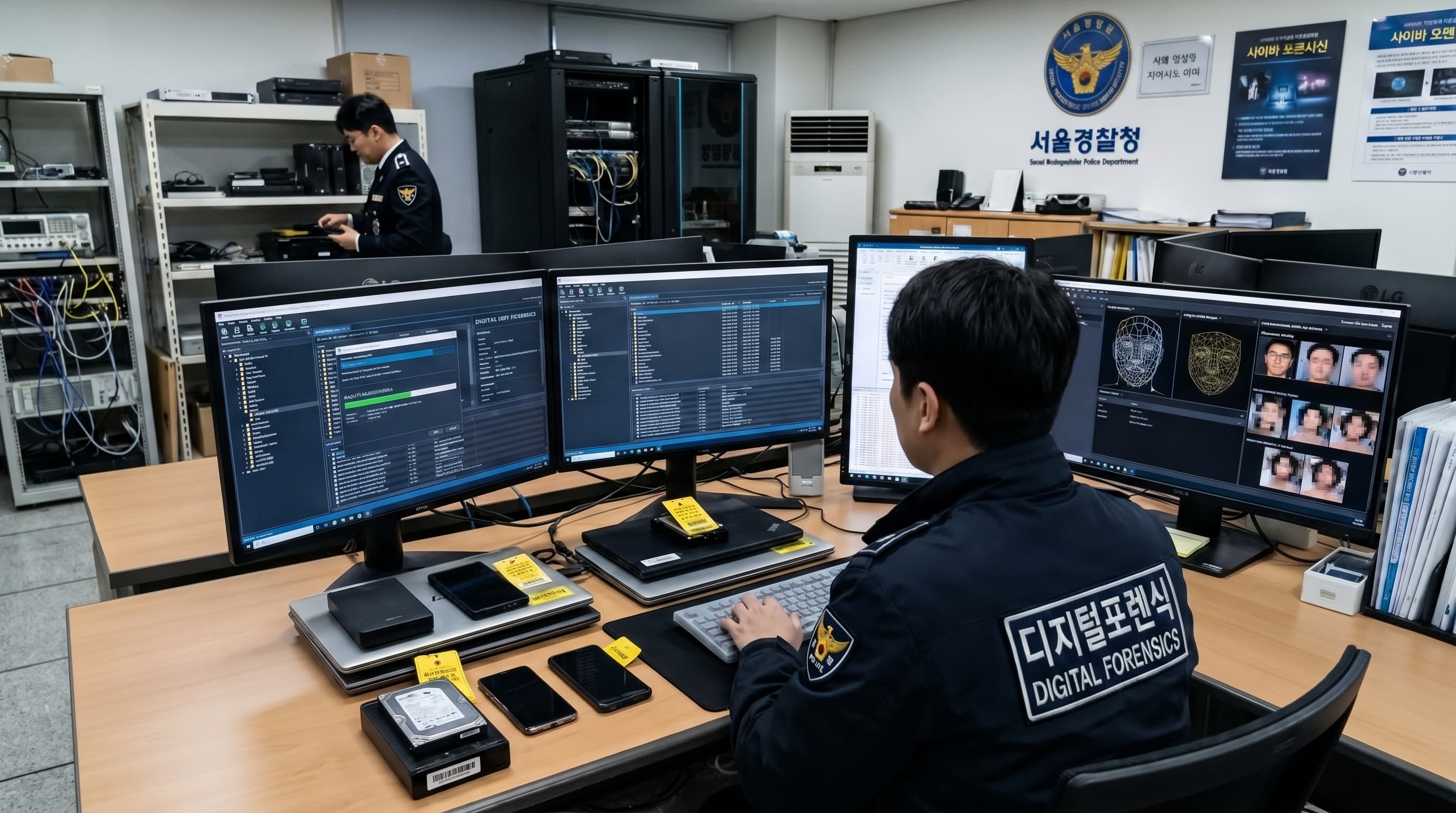
A six-month digital forensics investigation by South Korean authorities led to the arrest of a serving Seoul police officer for systematically fabricating and distributing explicit deepfake media targeting acquaintances.
The evidentiary figures, disclosed through official police briefings, stem from comprehensive forensic extractions across multiple personal and network-connected devices. Digital examiners recovered approximately 5,600 illicit media files, including 2,600 AI-synthesized explicit videos and images alongside 1,600 child exploitation assets. Over 400 targeted synthetic files were confirmed to depict personal acquaintances of the suspect.
Investigators have since expanded the probe to forensic audit logs and dark web channels, tracing potential distribution networks and peer-to-peer sharing rings. During the expanded analysis, examiners identified secondary staging drives used to archive raw facial training datasets harvested from public social media profiles.
The underlying technology utilizes lightweight generative face-swap algorithms that map victim facial landmarks onto existing explicit source footage frame by frame. Forensics teams are refining automated perceptual-hash and metadata-parsing workflows to expedite artifact recovery across vast storage volumes.
The findings have renewed serious concerns over the weaponization of personal social media imagery and the alarming ease with which consumer hardware can generate high-volume synthetic abuse.
For digital forensics and multimedia investigations, the case highlights a critical distinction: an algorithmic deepfake flag is an investigative indicator, not court-admissible proof without device-level artifact recovery and provenance tracking.