London Scanned 500,000 Faces and Caught Nobody. Here's Why That Matters
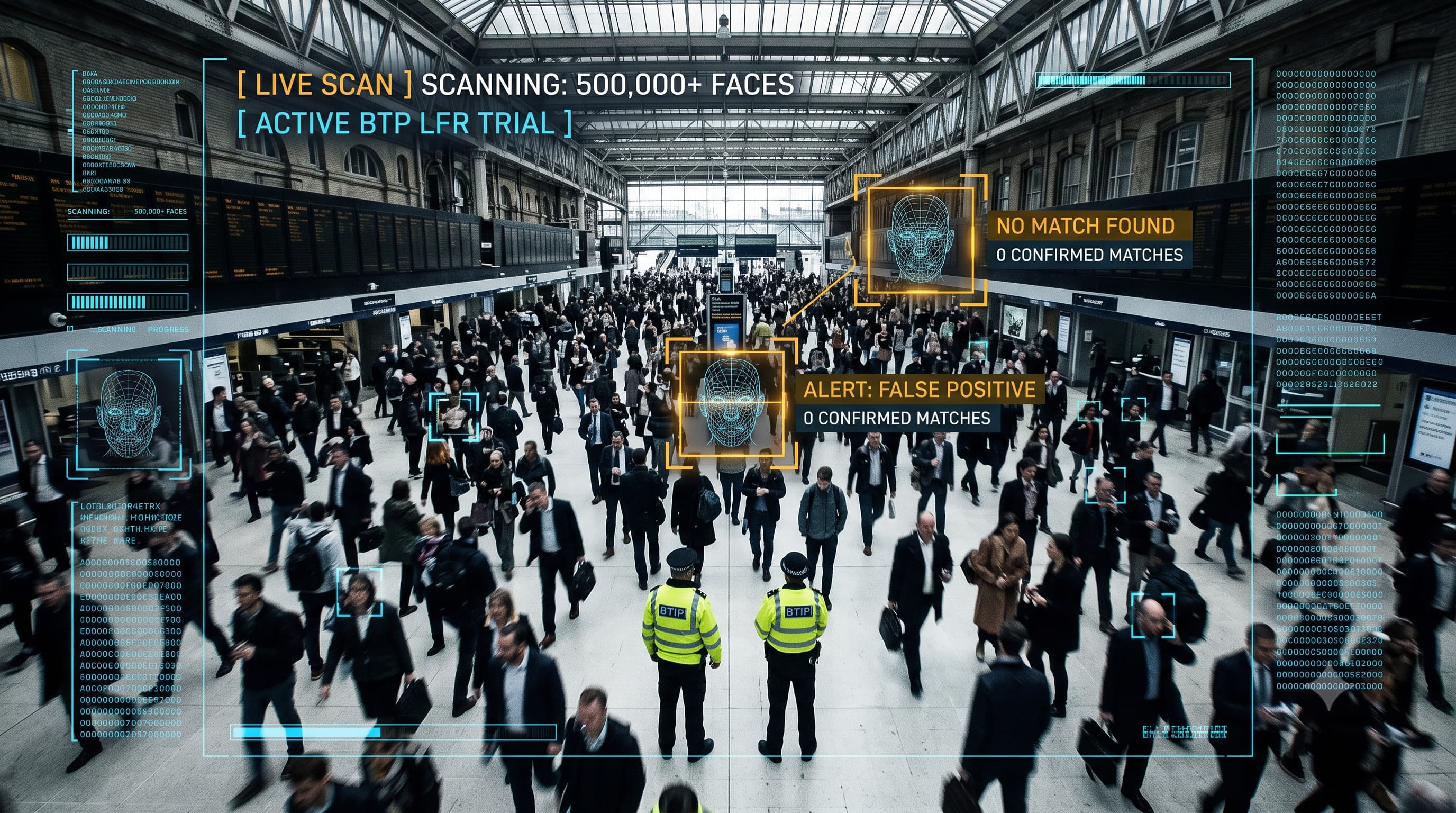
A six-month live facial recognition (LFR) trial by British Transport Police (BTP) at London railway stations scanned more than 500,000 faces, but produced just one alert, which was a false positive.
The figures, obtained through a Freedom of Information request, cover 18 deployments between February and July 2026. The operation cost £320,786 and used almost 100 hours of police officers’ time. No arrests resulted directly from an LFR alert during the trial.
BTP has nevertheless extended the program for another four months, expanding deployments to London Underground stations. During the extension, three watchlist matches were recorded, but those individuals were found to be compliant with their court orders.
The technology compares faces captured by live cameras against predefined police watchlists and generates an alert when a potential match is detected. BTP says it is continuing to refine its deployment and watchlist procedures.
The results have renewed concerns over the effectiveness and proportionality of facial recognition in crowded public spaces, particularly when large numbers of people are scanned to produce very few actionable matches.
For digital forensics and biometric investigations, the trial highlights a critical distinction: a facial-recognition alert is an investigative lead, not proof of identity.