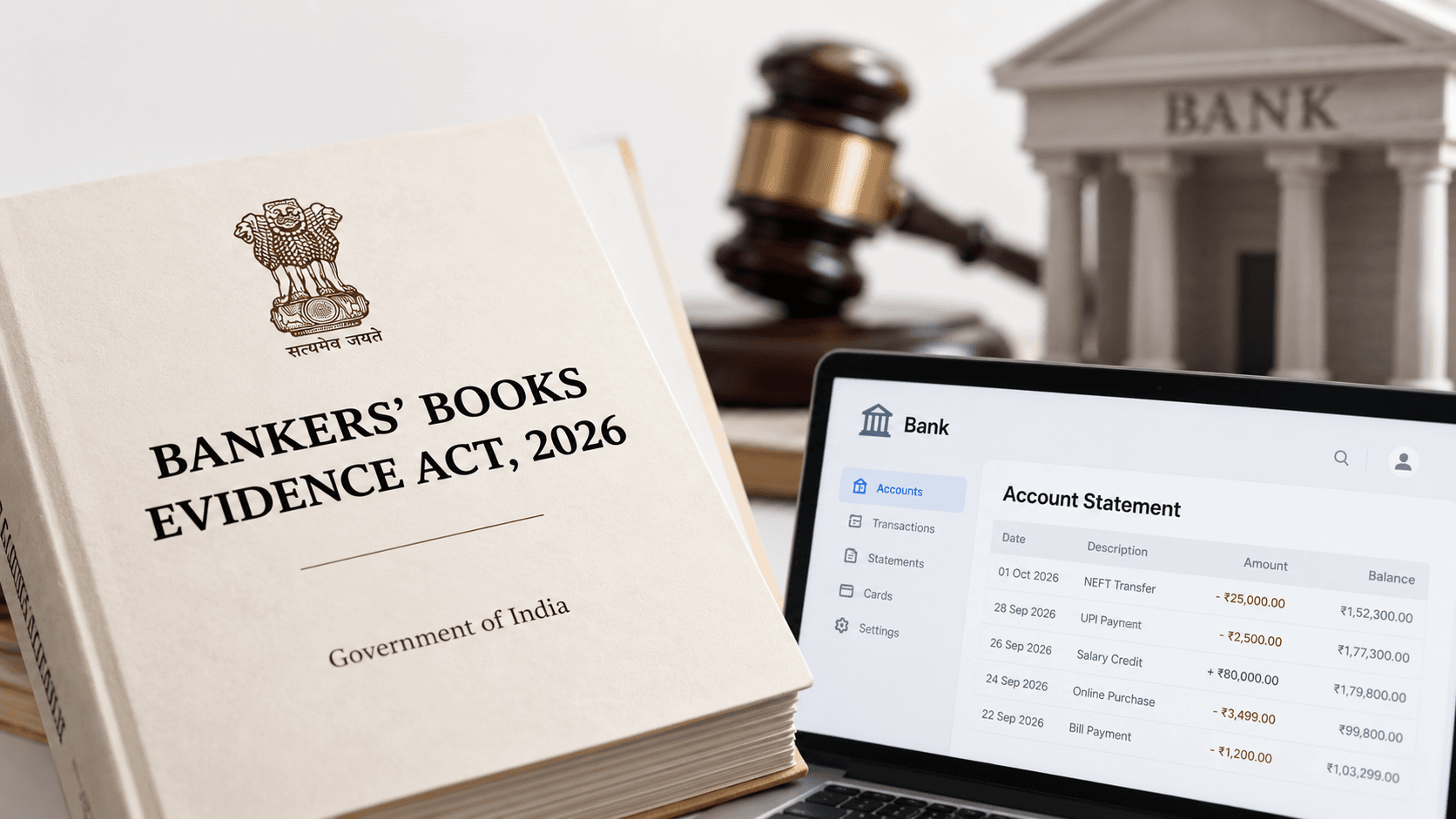
India’s Bankers’ Books Evidence Act, 2026 came into force on October 1, replacing the 1891 legislation and updating the legal framework for using banking records as evidence.
The new Act explicitly covers banking records maintained in electronic, digital, virtual and cloud-based systems, reflecting the way financial institutions store and process information today.
It also introduces requirements around the certification and integrity of electronic records. Certified copies must accurately represent the original records and must not show unauthorised alterations or tampering. The certification can be provided through manual, digital or electronic signatures.
The change is particularly relevant to investigations involving cyber fraud, online banking scams, money laundering and other financial crimes, where digital banking records can become important evidence.
The government says the new framework is intended to bring banking evidence law in line with modern digital banking systems while simplifying the process of producing bank records during investigations and court proceedings.
For digital-forensics professionals, the development could make the preservation, certification and integrity of financial records increasingly important parts of evidence handling.